A steady rebuilding of services, collections and spaces
The bedding down of Special Collections in a new premises at Deneb House in Observatory continued throughout 2025 in what was a steady rebuilding of services, collections and spaces.
Move to Deneb House and the opening of the Reading Room
During the move to Deneb House, research support services were limited to the Consultation Room at the Government Publications Library on Upper Campus. It soon became apparent that this small space could not accommodate the demand for access. In May 2025, the Deneb House Reading Room was opened on an appointment basis. The space emulates the lost Reading Room in an attempt to provide a serene space for study and reflection by visiting researchers. Special Collections hosted group tours to UCT postgraduate students in Heritage Studies, Architecture, and Information Studies. They also welcomed visiting professional staff from the UNISA Archive and the Western Cape Archives.
In August, the installation of compactus shelving at Deneb House was completed, paving the way for most recovered library materials to be shelved, including Special Collections published resources, including all surviving African Studies books, pamphlets, and journals, as well as historical journals currently housed off-site. The shelving allowed the re-boxed manuscripts currently housed off-site to be brought to Deneb House, reducing the logistical complexity and turnaround time to make archives accessible.
In late October 2025, two brand new Minolta SL1000Q digital microfilm readers were acquired by the Libraries and delivered to Deneb House. These devices replaced the two very popular 3000 DV Plus Microfilm Scanners destroyed in the fire, with considerable digital upgrades, making newspapers and surviving microfilm and microfiche held by Special Collections available to researchers for the first time since before the 2020 lockdown.
Reconciliation and Recovery
The reconciliation and recovery process continued apace in 2025. By October, 20,981 rare books had been reconciled, with 1,789 processed. Government Publications reconciled 99 items while African Studies journal reconciliation began in October (27 journals processed). Compact shelving enabled shelving of African Studies pamphlets. Significant donations included collections from Prof. Michelle Williams, Prof. Kader Asmal, and Mr. Simmons. Digital outreach included articles and blogs showcasing collections and literacy initiatives.
Processing of the audio-visual (AV) archive resumed with multiple projects: architectural collections (various papers and drawings) progressed through organization, conservation, and metadata capture. Manuscripts re-boxing advanced—over 600 boxes recovered and many named collections re-boxed. The AV team published an IASA article on digitisation, launched the Ibali South African Banned Persons Memory Project (3 Nov 2025), and handled 54 queries during the period. AI tools and Cockatoo software aided metadata creation.
The Conservation Unit implemented standard operating procedures and a Good Practice Plan, reorganized workspaces for wet/dry treatments, introduced a new condition/treatment report format, and centralized documents on Microsoft Teams. They treated 70+ mould-affected books, identified 28 mould-impacted objects, procured worktables, dehumidifiers, and hygrometers, and hosted training and internships—advancing capacity and preparedness while pursuing a centre of excellence in conservation.
Reimagining the Jagger Library
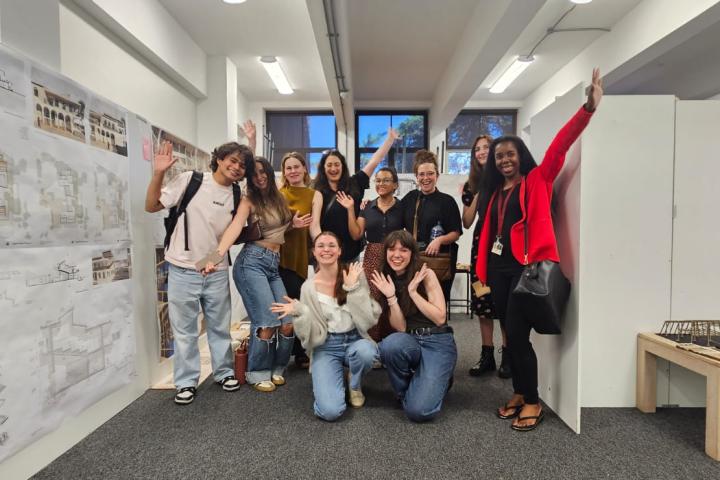
In the third and fourth quarters of 2025, the Special Collections team engaged with Honours students from the Department of Architecture on design projects reimagining the Jagger Library. Staff shared operational workflows, research service requirements, and challenges experienced in the former building, including accessibility, technical infrastructure, and staff workspace limitations. Students visited the team at Deneb House and later returned with design queries, which the team supported.

The collaboration concluded with an invitation to view student models exhibited in the Centlivres Building. The projects reflected innovative, theory-informed approaches to preservation, exhibition, communal scholarship, and the reimagining of Special Collections within the university’s intellectual centre.